
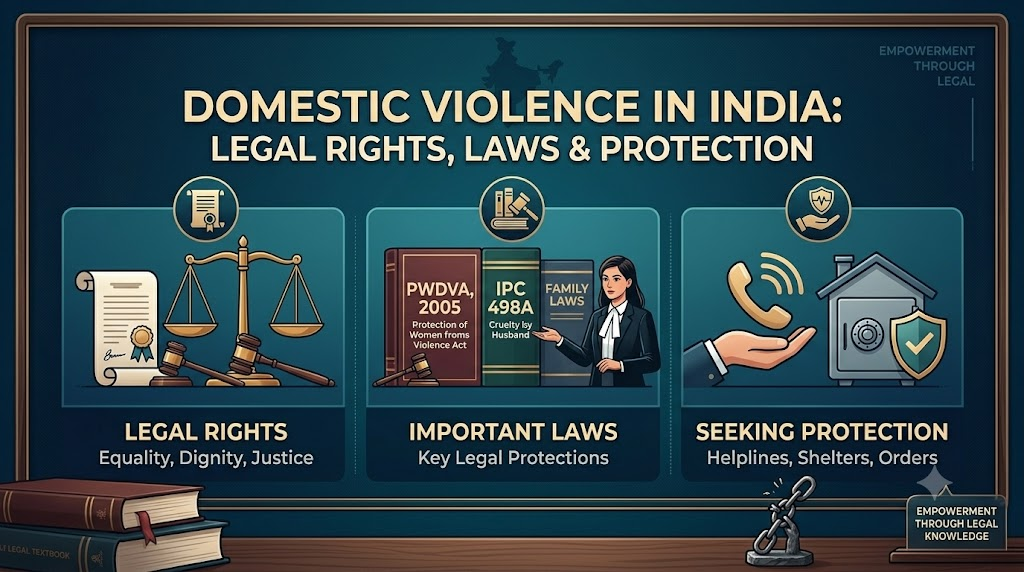
Domestic Violence in India: Legal Rights, Laws and How to Seek Protection
Domestic violence is one of the most serious social and legal issues affecting individuals and families across India. It is not limited to physical abuse alone but also includes emotional, psychological, sexual and economic abuse within a domestic relationship. Many victims suffer silently due to fear, social pressure, financial dependency or lack of awareness about their legal rights.
Indian law provides strong protection mechanisms for victims of domestic violence. The Protection of Women from Domestic Violence Act, 2005 (PWDVA) is a landmark legislation designed to safeguard women from abuse and ensure immediate relief and protection. Understanding these laws and knowing how to take legal action can make a significant difference in stopping abuse and rebuilding life with dignity.
This blog explains domestic violence in detail, the legal rights available in India, important laws and step-by-step guidance on how to seek protection.
What is Domestic Violence?
Domestic violence refers to any form of abuse or mistreatment within a domestic relationship. It can happen between spouses, partners, family members or anyone living in a shared household.
Under Indian law, domestic violence includes:
- Physical abuse (hitting, slapping, pushing, beating)
- Emotional and psychological abuse (insults, humiliation, threats)
- Sexual abuse (forced or non-consensual acts)
- Economic abuse (controlling money, restricting access to resources)
- Verbal abuse (constant criticism, intimidation, harassment)
It is important to understand that domestic violence is not only physical violence, mental and emotional abuse are equally recognized under Indian law.
Laws Related to Domestic Violence in India
1. Protection of Women from Domestic Violence Act, 2005 (PWDVA)
The PWDVA is the primary law that protects women from domestic violence in India. It provides immediate relief and protection rather than only punishment.
Key features of the Act:
- Protection orders to stop abuse
- Residence rights in shared household
- Monetary relief and maintenance
- Custody orders for children
- Compensation for mental and physical injuries
This law is civil in nature, meaning it focuses on protection and relief rather than criminal punishment.
2. Indian Penal Code (IPC) Sections
In serious cases, criminal charges may also be filed under IPC, such as:
- Section 498A IPC – Cruelty by husband or relatives
- Section 323 IPC – Voluntarily causing hurt
- Section 506 IPC – Criminal intimidation
- Section 304B IPC – Dowry death (in extreme cases)
These sections allow the victim to pursue criminal action against the accused.
3. Criminal Procedure Code (CrPC)
Under Section 125 CrPC, a woman can claim maintenance from her husband if she is unable to support herself financially.
Who Can File a Domestic Violence Complaint?
Under the PWDVA, the following persons can file a complaint:
- Wife or female partner
- Live-in partner
- Mother, sister or daughter facing abuse in the household
- Women living in shared family homes
A complaint can also be filed through:
- Protection Officer
- Police officer
- NGO or service provider
- Advocate on behalf of the victim
Rights of a Victim Under Domestic Violence Law
Indian law ensures several important rights for victims:
1. Right to Protection
Victims can request a protection order from the court to stop the abuser from contacting or harming them.
2. Right to Residence
A woman has the right to live in the shared household, even if she does not own the property.
3. Right to Monetary Relief
The court can order the abuser to provide financial support for:
- Medical expenses
- Daily living expenses
- Loss of income
4. Right to Custody
Temporary custody of children can be granted to the victim for safety.
5. Right to Compensation
Victims can claim compensation for physical injuries, emotional trauma and mental distress.
How to File a Domestic Violence Complaint in India
If you are facing domestic violence, here is the step-by-step process:
Step 1: Reach Out for Help
You can approach:
- Local police station
- Protection Officer
- Women’s helpline (181 in many states)
- Lawyer or legal aid services
Step 2: File a Complaint
A written or verbal complaint can be submitted describing the abuse and incidents.
Step 3: Medical Examination (if needed)
In case of physical abuse, medical evidence should be collected from a government hospital.
Step 4: Court Application
A petition is filed in the Magistrate Court under the Domestic Violence Act.
Step 5: Court Proceedings
The court may issue:
- Interim protection orders
- Residence orders
- Monetary relief orders
Step 6: Final Order
After hearing both sides, the court passes a final judgment and protection order.
Role of Police and Protection Officers
Protection Officers play a key role in assisting victims. Their responsibilities include:
- Helping file complaints
- Providing legal guidance
- Assisting in court proceedings
- Ensuring victim safety
- Coordinating with NGOs and shelters
Police officers are also required to assist and cannot refuse to register complaints in genuine cases.
Evidence Required in Domestic Violence Cases
Strong evidence increases the chances of a successful case. Important evidence includes:
- Medical reports
- Photographs of injuries
- Audio/video recordings (if available)
- WhatsApp or text messages
- Witness statements (family/neighbours)
- Previous complaints or FIRs
False Domestic Violence Cases: Legal Perspective
While the law strongly protects victims, false cases can also occur in some situations. If a person is falsely accused, legal remedies include:
- Filing for quashing of FIR
- Defamation case
- Seeking anticipatory bail
- Presenting strong documentary evidence in court
Courts carefully evaluate evidence before passing final orders.
Importance of Legal Support in Domestic Violence Cases
Domestic violence cases are sensitive and emotionally challenging. Having an experienced advocate helps in:
- Proper documentation of evidence
- Filing accurate legal petitions
- Representation in court hearings
- Ensuring faster relief and protection
- Handling criminal and civil proceedings together
Legal guidance ensures that victims receive justice without unnecessary delay.
Why Awareness About Domestic Violence Laws is Important
Many victims do not come forward due to lack of awareness. Understanding legal rights helps in:
- Breaking the cycle of abuse
- Ensuring personal safety
- Protecting children from harmful environments
- Accessing financial and emotional support
- Achieving long-term justice
Awareness is the first step toward empowerment.
Conclusion
Domestic violence is a serious violation of human rights, but Indian law provides strong legal remedies to protect victims and ensure justice. The Protection of Women from Domestic Violence Act, 2005 plays a crucial role in offering immediate relief, protection and financial support.
If you or someone you know is facing domestic violence, it is important to take timely legal action. Consulting an experienced advocate can help you understand your rights and guide you through the legal process effectively.
FAQs
1. What is the punishment for domestic violence in India?
Domestic violence under PWDVA is mainly civil, but criminal charges under IPC like 498A can lead to imprisonment.
2. Can I file a domestic violence case without FIR?
Yes, cases under PWDVA are filed through a petition in Magistrate Court, not necessarily FIR.
3. Can a live-in partner file a domestic violence case?
Yes, women in live-in relationships are also protected under the law.
4. How long does a domestic violence case take?
It depends on the case, but interim protection orders can be granted quickly.
5. Is police help mandatory in domestic violence cases?
Police assistance is optional but available; complaints can also be filed directly in court.